
Why Can’t I Sleep When My Baby Is Sleeping? Postpartum Anxiety
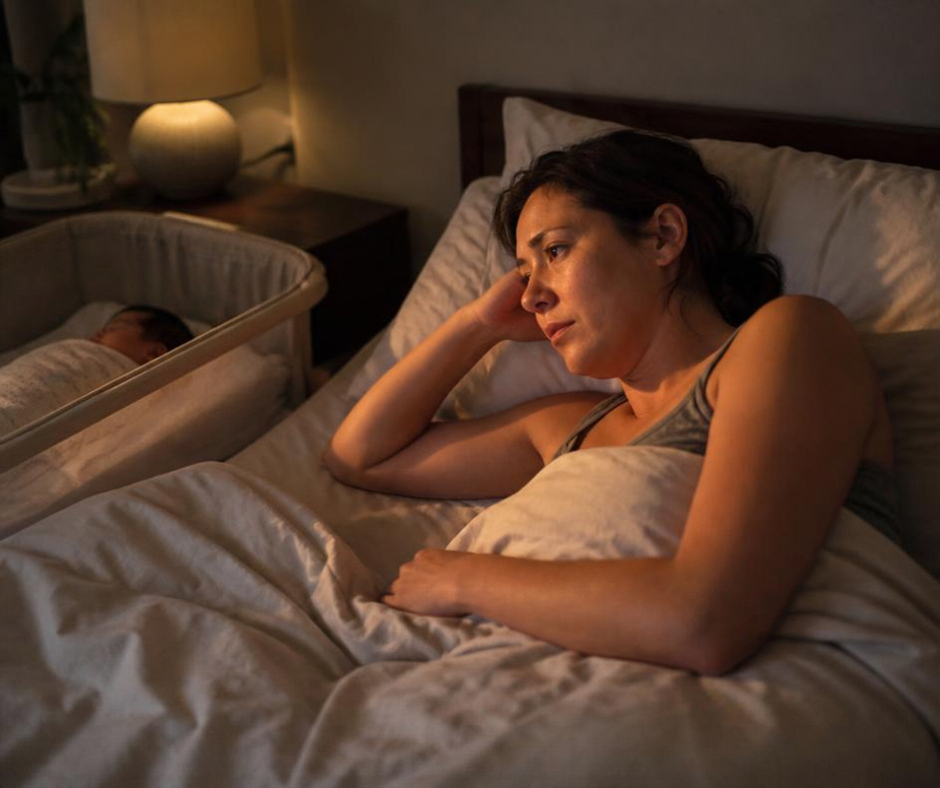
Your baby is finally asleep.
The house is quiet. You are exhausted. You have probably been waiting for this moment all day.
So why can't you sleep?
Instead, your brain suddenly seems wide awake.
What do I need to get done tomorrow?
Did I wash the bottles?
I should have done another load of laundry.
What if the baby wakes up as soon as I fall asleep?
Is the baby breathing okay?
Should I check one more time?
Maybe you pick up your phone because you need something to distract you from your thoughts. You open Facebook or Instagram and start scrolling.
Then you see a post from another mom about infant sleep. Or feeding. Or milestones. Or SIDS. Or something you hadn't even thought to worry about until you saw it.
Now you're Googling.
Twenty minutes later, you're three rabbit holes deep, worrying about something that wasn't even on your radar an hour ago.
Meanwhile, your baby is sleeping—and you're wide awake.
If this sounds familiar, you're not alone. Difficulty turning your brain off at night is something I hear about frequently from moms experiencing postpartum anxiety.
Why Does My Anxiety Feel Worse at Night?
During the day, there is often very little quiet when you have a new baby.
You're feeding, changing diapers, washing bottles or pump parts, answering messages, making appointments, trying to eat something yourself, thinking about what needs to be done around the house, and possibly caring for older children, too.
Then nighttime comes. The distractions get quieter, but your brain doesn't necessarily follow. For some moms, this is when everything they've been carrying mentally all day suddenly has room to surface. Your body may be exhausted while your brain is still operating in monitoring and problem-solving mode.
And when you're responsible for a brand-new baby, your brain has plenty to monitor.

The Goal Isn't to Never Worry About Your Baby
This is something I often talk about with moms in therapy:
The goal isn't for you to never worry.
Some worry serves a purpose.
You have a tiny person who depends on you for everything. Paying attention to your baby's feeding, sleep, comfort, health, and safety helps you care for your baby.
We don't need to eliminate that.
Instead, I encourage moms to start looking at how much time worry is taking up and whether the worry matches what is actually happening.
For example:
“My baby hasn't eaten in several hours, so I need to check on her.”
That's different from:
“My baby is sleeping peacefully, but I can't let myself fall asleep because I keep imagining something terrible happening if I stop watching her.”
Or:
“I need to remember to wash the bottles tomorrow.”
Versus spending the next hour mentally going through tomorrow's entire to-do list because your brain won't allow you to put it down.
The question isn't necessarily:
“Am I worrying?”
A more helpful question might be:
“Is this worry helping me respond to something that actually needs my attention right now, or is anxiety keeping me stuck on something that isn't happening?”
You can also ask:
“How much of my day or night is anxiety taking from me?”
When Your Brain Won't Let You Clock Out
One of the hardest parts of early motherhood is that there isn't always a clear end to the day. Before having a baby, you might have finished work, gotten ready for bed, and mentally checked out for the evening.
Motherhood doesn't work that way. There's always something else you could be doing.
Another bottle to wash.
Laundry to fold.
Something to order.
An appointment to schedule.
A question you meant to research.
Something you need to remember tomorrow.
And sometimes when you finally lie down, your brain starts trying to make sure you don't forget any of it. That can make sleep incredibly difficult even when you're physically exhausted.
Does this sound familiar? I recently talked about this common postpartum anxiety experience:
Postpartum anxiety can make it difficult to turn your mind off—even when your baby is finally sleeping. In this video, Andrea Crafton, LPC, PMH-C, explains why racing thoughts and worry can make it so difficult for new moms to rest.
Social Media Can Give Your Anxiety New Material
Then there's your phone.
I don't think it's particularly helpful to tell an exhausted postpartum mom, “Just stop scrolling.” Sometimes you're scrolling because you're already awake and anxious. You're looking for distraction, connection, reassurance, or simply something to do while feeding a baby in the middle of the night. But social media can also keep the anxiety cycle going.
You may see another mom talking about her baby's sleep schedule and wonder why your baby isn't doing that.
Someone shares what they're feeding their baby, and suddenly you're questioning your own feeding choices.
Another video warns parents about a safety issue you had never heard of.
Now you need to research it.
And the more motherhood content you interact with, the more motherhood content your feed may show you. Before long, your attempt to relax has turned into another source of information for your already-overloaded brain to process.
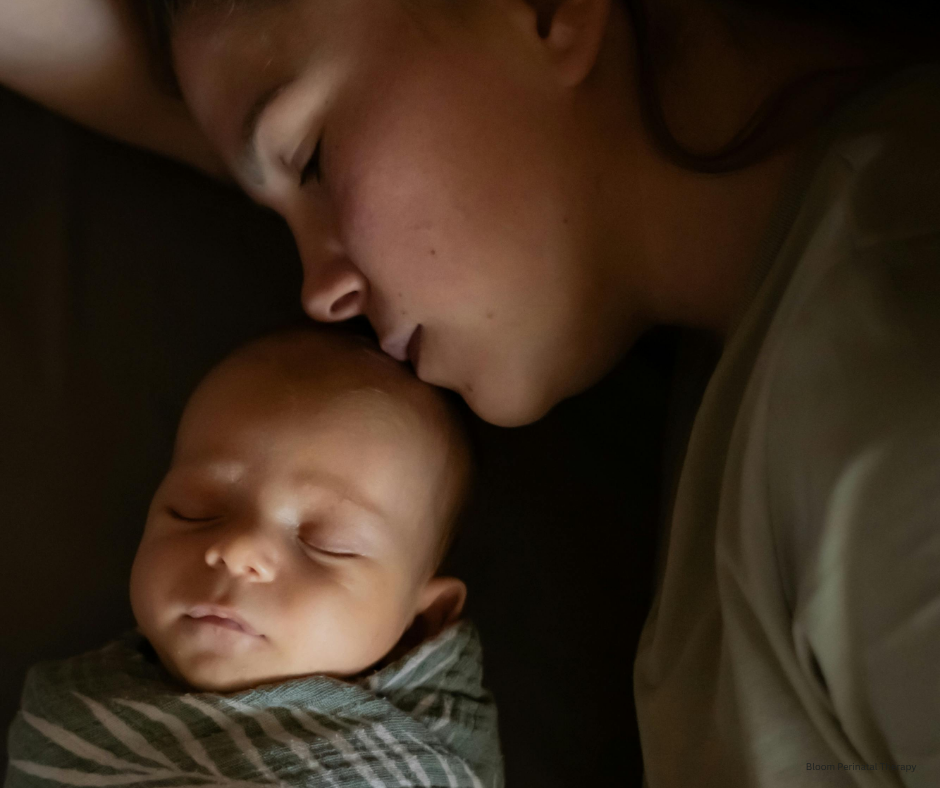
So How Do You Help Your Brain Slow Down at Night?
If your brain has spent the entire day anticipating needs, solving problems, and keeping track of everything for everyone, it may not immediately switch off just because you finally get into bed.
Sometimes it helps to give your brain somewhere else to put all of the things it is trying so hard not to forget. Keep a notebook beside your bed or use a note on your phone to write down the things that pop into your head.
Call the pediatrician tomorrow.
Order more diapers.
Wash pump parts.
Ask about that at the next appointment.
Writing something down doesn't mean you have to solve it right now. It simply gives your brain permission to stop holding onto it for the night.
The same can be helpful with questions you suddenly feel like you need to Google. Unless it is something that actually needs your attention right now, write the question down and come back to it during the day. You may find that it doesn't feel nearly as urgent in the morning. It can also help to notice when you are looking for information versus looking for reassurance.
If you've already checked that your baby is okay but feel the urge to check again, pause for a moment before doing it.
Ask yourself:
“Has something changed, or is my anxiety asking me to make sure one more time?”
That small pause can help you begin recognizing the difference between responding to your baby and responding to anxiety.

You Need Time When You Aren't the One on Watch
For some moms, one of the hardest things to do postpartum is truly hand over responsibility. Even when someone else is caring for the baby:
You may still be listening.
You may still be watching the monitor.
You may still be reminding your partner what to do.
You may technically be “off duty,” but your brain hasn't gotten the message.
If you have a partner or another trusted person who can help, having a period of time when someone else is fully responsible for the baby can give your nervous system an opportunity to stand down. That doesn't mean you won't hear your baby. It doesn't mean you won't care what is happening. And it certainly doesn't mean you're doing anything wrong if relaxing doesn't happen immediately. For a brain that has gotten used to being on alert, learning that it is safe to rest may take some practice.
When Is Nighttime Worry More Than Normal New-Mom Worry?
There isn't a certain number of worries you have to have before you're “anxious enough” to deserve support. Instead, look at how anxiety is affecting your life.
Are you unable to sleep even when your baby is sleeping and you have an opportunity to rest?
Are you repeatedly checking on your baby even after you've confirmed that your baby is okay?
Are you spending significant amounts of time Googling, researching, or asking others for reassurance?
Do you feel like you always have to be on alert because something bad might happen if you relax?
Are your thoughts making it difficult to enjoy your baby or be present in your day?
Remember the question from earlier:
How much of my day or night is anxiety taking from me?
If the answer is a lot, you don't have to wait for it to get worse before reaching out for support.
You Deserve to Rest, Too
There will probably always be something else you could be doing.
Another load of laundry.
Another question to Google.
Another thing to prepare for tomorrow.
Another reason to check one more time.
But you were never meant to spend every moment of motherhood on alert.
Your baby needs care.
And so do you.
Looking for a Postpartum Anxiety Therapist in Missouri or Florida?
If anxiety is making it difficult for you to rest, enjoy motherhood, or feel like yourself, you don't have to navigate motherhood all by yourself.
I'm Andrea Crafton, a Licensed Professional Counselor and Perinatal Mental Health Certified therapist. I specialize in supporting women through postpartum anxiety and depression, intrusive thoughts, birth trauma, pregnancy anxiety, fertility challenges, pregnancy loss, and the many emotional changes that can come with motherhood.
I offer online therapy for women throughout Missouri and Florida, allowing you to receive support from home, which can be especially helpful during the postpartum period when getting yourself and a baby out the door may feel like one more thing to manage.
If you'd like to see whether working together feels like a good fit, you can schedule a free 15-minute phone consultation.
