
Postpartum Psychosis: Signs, Symptoms & When to Get Help
Postpartum psychosis is one of the most serious mental health conditions that can occur after childbirth, yet many people have never heard of it.
Recent public discussion surrounding cases involving postpartum psychosis has left many mothers, families, and healthcare providers asking questions about what postpartum psychosis actually looks like, how it differs from postpartum depression, anxiety, or postpartum OCD, and when someone needs immediate help.
As a perinatal mental health therapist, I believe it is important to talk about this condition clearly and without judgment. Understanding the warning signs can help mothers, partners, families, and healthcare providers recognize when something may be wrong and respond quickly.
Postpartum psychosis is rare, but it is a medical emergency. Knowing the warning signs matters.
Featured by KBSI FOX23 News
This article was featured as a resource in KBSI FOX23's coverage highlighting postpartum mental health awareness.
What Is Postpartum Psychosis?
Postpartum psychosis is a serious psychiatric condition that can occur after childbirth. It can involve a significant disruption in a person's ability to distinguish what is real from what is not.
Unlike the more common "baby blues," postpartum depression, or postpartum anxiety, postpartum psychosis can involve symptoms such as hallucinations, delusions, severe confusion, paranoia, and significant changes in behavior or thinking.
Postpartum psychosis can develop quickly, sometimes within the first days or weeks after childbirth. Because symptoms can progress rapidly, recognizing the warning signs and seeking immediate medical evaluation is extremely important.
Postpartum psychosis is not a mother's fault, and experiencing it does not mean someone is a bad mother.
It is a serious medical condition that requires appropriate treatment and support.
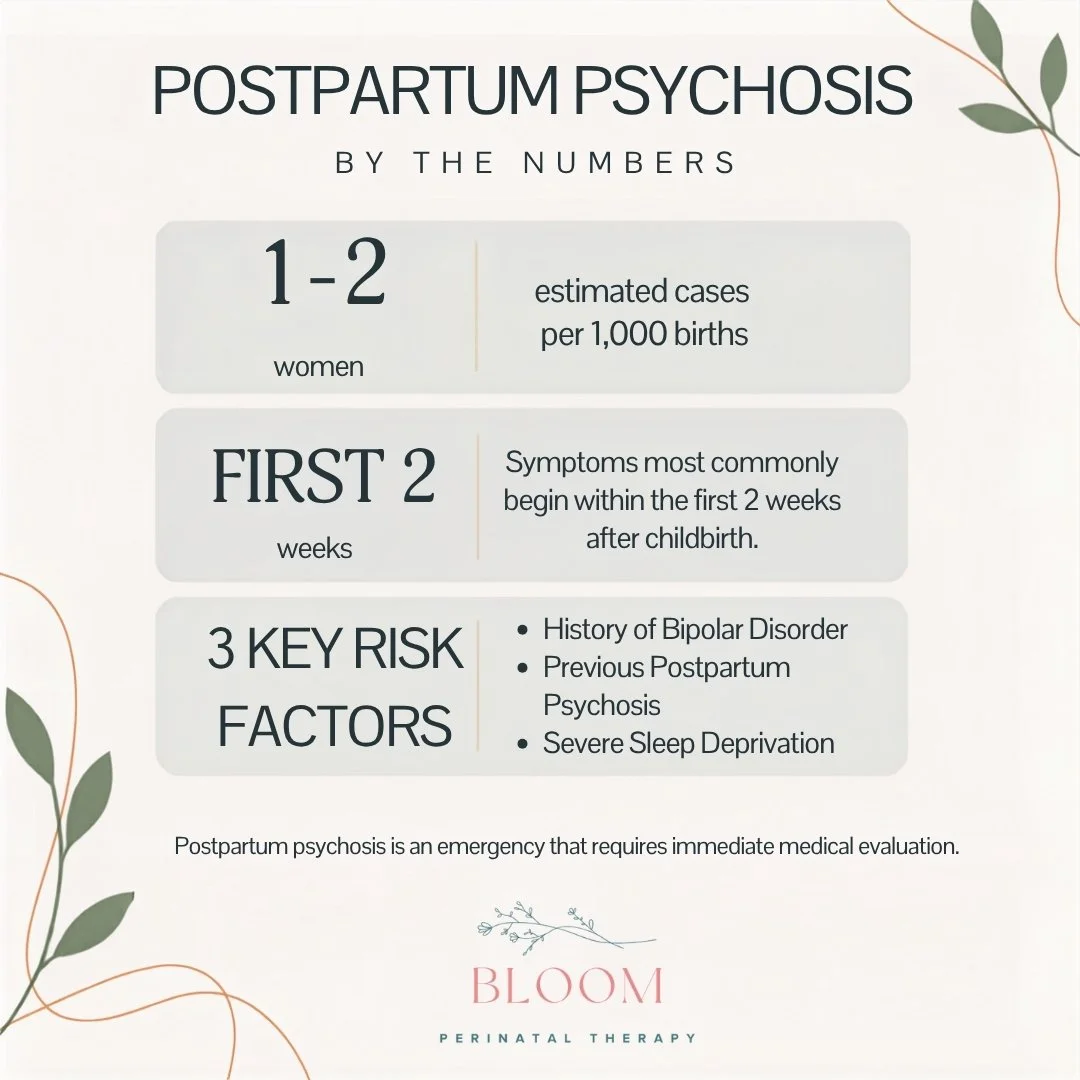
It is estimated to affect approximately 1–2 women per 1,000 births, with symptoms most commonly beginning within the first two weeks after childbirth. Certain factors, including a history of bipolar disorder, previous postpartum psychosis, and significant sleep disruption, may increase risk.
What Are the Signs of Postpartum Psychosis?
Postpartum psychosis can look different from one person to another. Some symptoms may initially seem like extreme exhaustion, unusual behavior, or severe anxiety.
Possible warning signs include:
Hallucinations — hearing, seeing, or experiencing things that others do not
Delusions — strongly held beliefs that are not based in reality
Severe confusion or disorientation
Paranoia or extreme suspiciousness
Disorganized thinking or speech
Significant changes in behavior
Extreme agitation or restlessness
Unusual or erratic behavior
Difficulty recognizing what is real
A dramatic change in sleep or energy accompanied by other concerning symptoms
Sometimes a mother may appear extremely energized or may go for prolonged periods without sleeping. Other times, she may become confused, frightened, suspicious, or behave in ways that are very different from her usual personality.
Because postpartum psychosis can change quickly, any significant concern about these symptoms should be taken seriously.
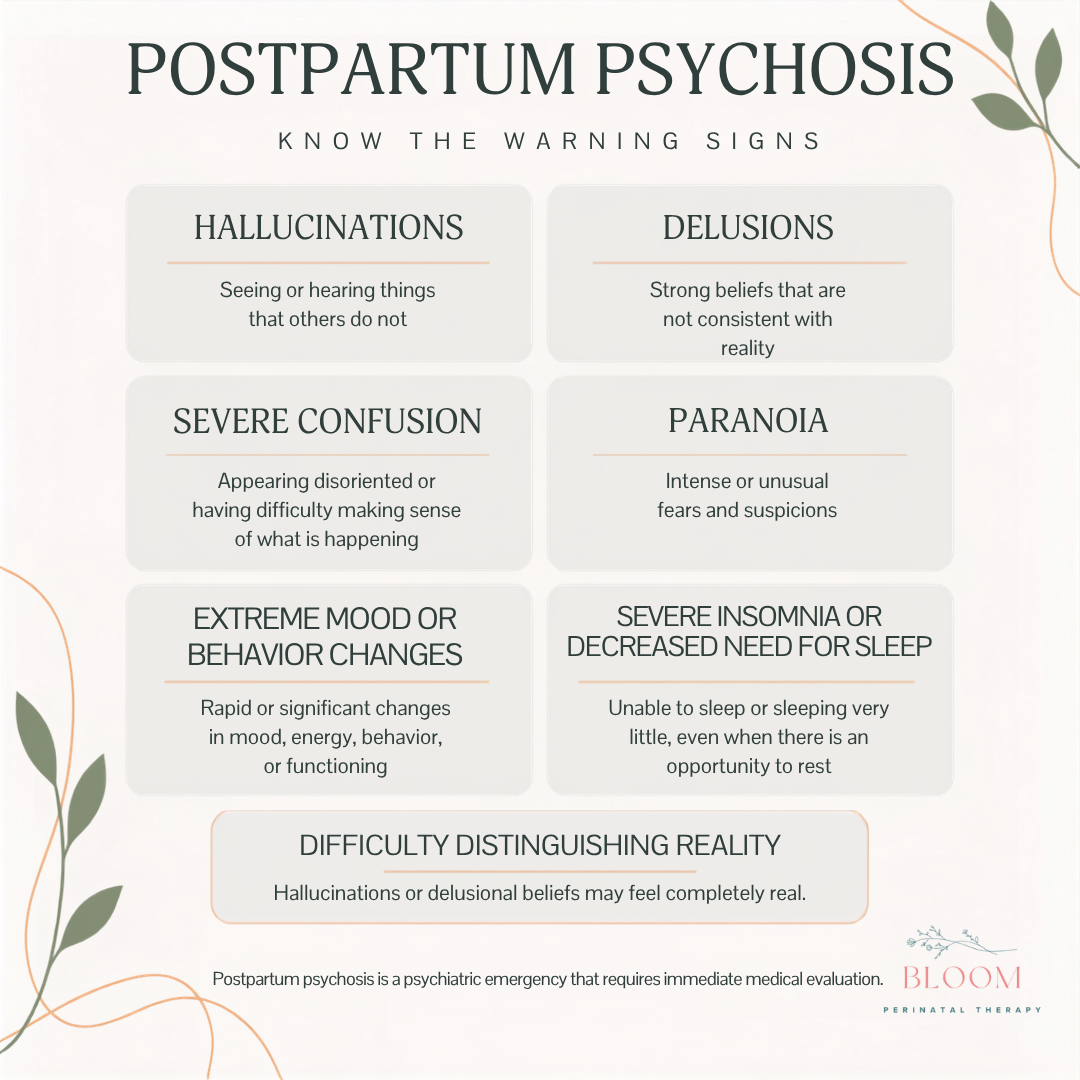
Common warning signs of postpartum psychosis can include hallucinations, delusions, severe confusion, paranoia, extreme mood or behavior changes, severe insomnia or decreased need for sleep, and difficulty distinguishing reality. Postpartum psychosis is a psychiatric emergency requiring immediate medical evaluation.
What Does Postpartum Psychosis Look Like?
One reason postpartum psychosis can be difficult to recognize is that it may not initially look like what people expect a mental health emergency to look like.
A mother may begin acting differently.
She may become increasingly suspicious of the people around her. She may express beliefs that don't make sense to others or appear convinced that something is happening when there is no evidence that it is. She may hear or see things that others cannot. She may become extremely confused or have difficulty following a normal conversation.
Family members may notice:
“This doesn't seem like her."
That feeling is important to pay attention to.
If someone who recently gave birth is experiencing a significant change in behavior, thinking, or perception of reality, don't assume it is simply sleep deprivation or the normal stress of having a newborn.
A significant change in behavior, thinking, or perception of reality warrants prompt medical evaluation.
Who Is at Risk for Postpartum Psychosis?
Postpartum psychosis can occur in women without a previous history of mental illness. However, certain factors can increase the risk.
These include a personal history of:
Bipolar disorder
Previous postpartum psychosis
Family history of mood disorders
Sleep deprivation
A previous episode of postpartum psychosis significantly increases the risk of experiencing it again after a future pregnancy. However, this does not mean that a mother will definitely experience postpartum psychosis again.
If you have a history of bipolar disorder or postpartum psychosis, talk with your healthcare providers before or during pregnancy about creating a plan for monitoring and support after delivery.
And importantly, not having a history of mental illness does not mean postpartum psychosis cannot happen.
Postpartum Psychosis vs. Postpartum Depression
Postpartum depression is much more common than postpartum psychosis.
Postpartum depression may involve:
Persistent sadness
Loss of interest or pleasure
Feelings of guilt or worthlessness
Difficulty connecting with your baby
Anxiety or irritability
Changes in sleep or appetite
Feeling overwhelmed or hopeless
Difficulty functioning day to day
Postpartum psychosis involves symptoms that can indicate a loss of contact with reality, such as hallucinations, delusions, or severe confusion.
A mother can experience depression and psychosis at the same time, so these conditions are not always completely separate.
If you are unsure what you are experiencing, you don't need to determine the diagnosis yourself. A healthcare or mental health professional can help evaluate your symptoms.
The differences between postpartum depression and postpartum psychosis can be easier to understand when you look at the symptoms and level of insight side by side.
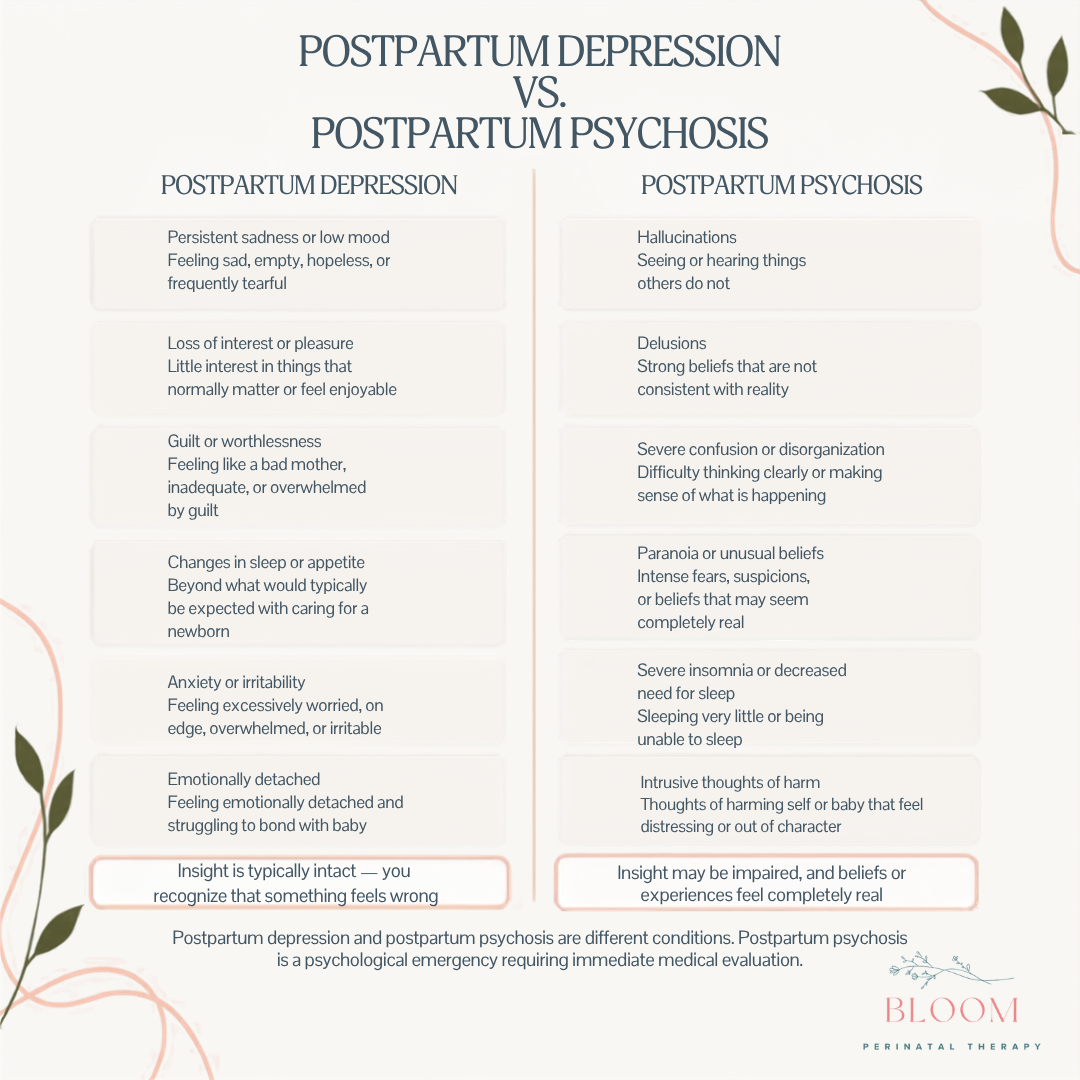
Postpartum depression and postpartum psychosis can share some symptoms, but they are different conditions. Postpartum psychosis may involve hallucinations, delusions, severe confusion, paranoia, and impaired insight and requires immediate medical evaluation.
Postpartum Psychosis vs. Postpartum OCD
Postpartum OCD can also involve frightening thoughts or images involving the baby, which can understandably cause confusion.
A mother experiencing postpartum OCD may have unwanted, intrusive thoughts or images about something terrible happening to her baby. These thoughts are often extremely distressing and unwanted.
She may recognize the thoughts as frightening or inconsistent with what she wants and may engage in checking, avoidance, reassurance-seeking, or other compulsive behaviors to try to prevent something bad from happening.
Postpartum psychosis is different.
A person experiencing psychosis may experience hallucinations, delusions, severe confusion, or difficulty distinguishing what is real from what is not.
Because these conditions can be complicated and symptoms can overlap with other mental health conditions, professional evaluation is important.
One of the most important differences between postpartum OCD and postpartum psychosis is how a mother experiences and interprets her thoughts. Intrusive thoughts in postpartum OCD are typically unwanted and distressing, while postpartum psychosis may involve impaired reality, including delusions or hallucinations that can feel completely real.
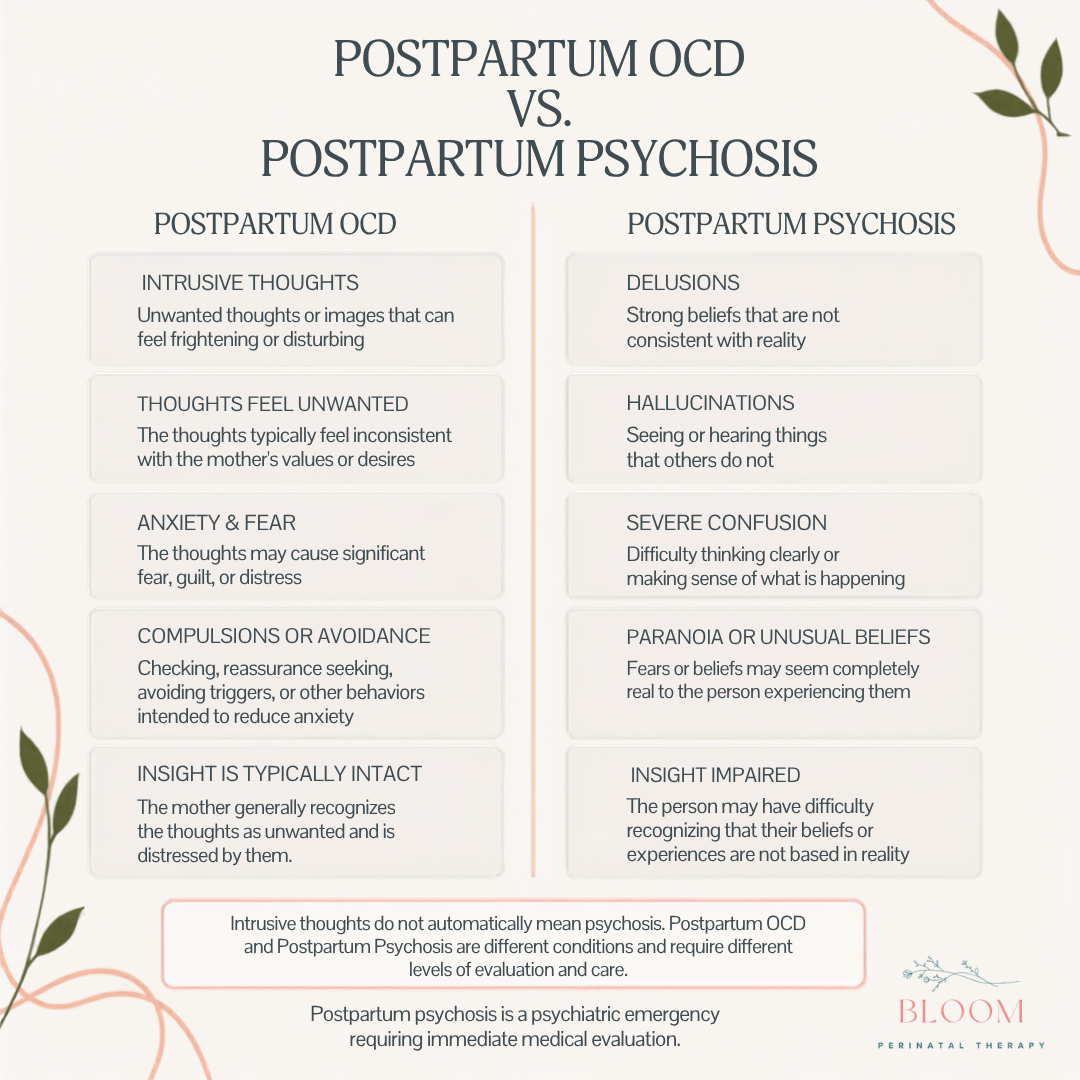
Postpartum OCD and postpartum psychosis are different conditions. Intrusive thoughts with postpartum OCD are typically unwanted and distressing, while postpartum psychosis may involve hallucinations, delusions, severe confusion, paranoia, and impaired reality testing. Postpartum psychosis is a psychiatric emergency requiring immediate medical evaluation.
Is Postpartum Psychosis an Emergency?
Yes.
Postpartum psychosis is a medical emergency and requires immediate evaluation.
If you or someone you love has recently given birth and is experiencing hallucinations, delusions, severe confusion, paranoia, or significant difficulty distinguishing reality from thoughts or beliefs, do not wait for a routine therapy appointment.
Seek immediate medical evaluation.
If there is an immediate concern that the mother or baby may be in danger, call 911 or go to the nearest emergency department.
A mother experiencing postpartum psychosis may not recognize that she is unwell or may not believe that she needs help. This is one reason partners, family members, friends, and healthcare providers can play an important role in recognizing changes and helping her receive care.
If you are concerned about someone, take the symptoms seriously.
What Should a Partner or Family Member Do?
If you are concerned that someone you love may be experiencing postpartum psychosis, you don't have to figure out the diagnosis yourself.
Focus on safety and getting professional help.
You can:
Take sudden or significant changes in behavior seriously.
Stay with the person if it is safe to do so.
Contact their healthcare provider or seek emergency medical evaluation.
Avoid arguing about hallucinations or delusional beliefs.
Speak calmly and provide reassurance that you are there to help.
Make sure the mother and baby are in a safe environment.
Seek emergency assistance if there is an immediate safety concern.
It can be frightening to see someone you love experiencing these symptoms. Remember that postpartum psychosis is a medical condition, not a personal failure.
Because postpartum psychosis can affect a person's ability to recognize that something is wrong, partners, family members, and other support people may be the first to notice concerning changes. If you suspect postpartum psychosis, seeking immediate medical evaluation is important.
If You're Reading This Because You're Worried About Someone You Love
Trust the significant change you're noticing, don't wait for her to agree that something is wrong if safety is at risk, stay with her, don't leave her alone with the baby when psychosis is suspected, and seek immediate medical evaluation.
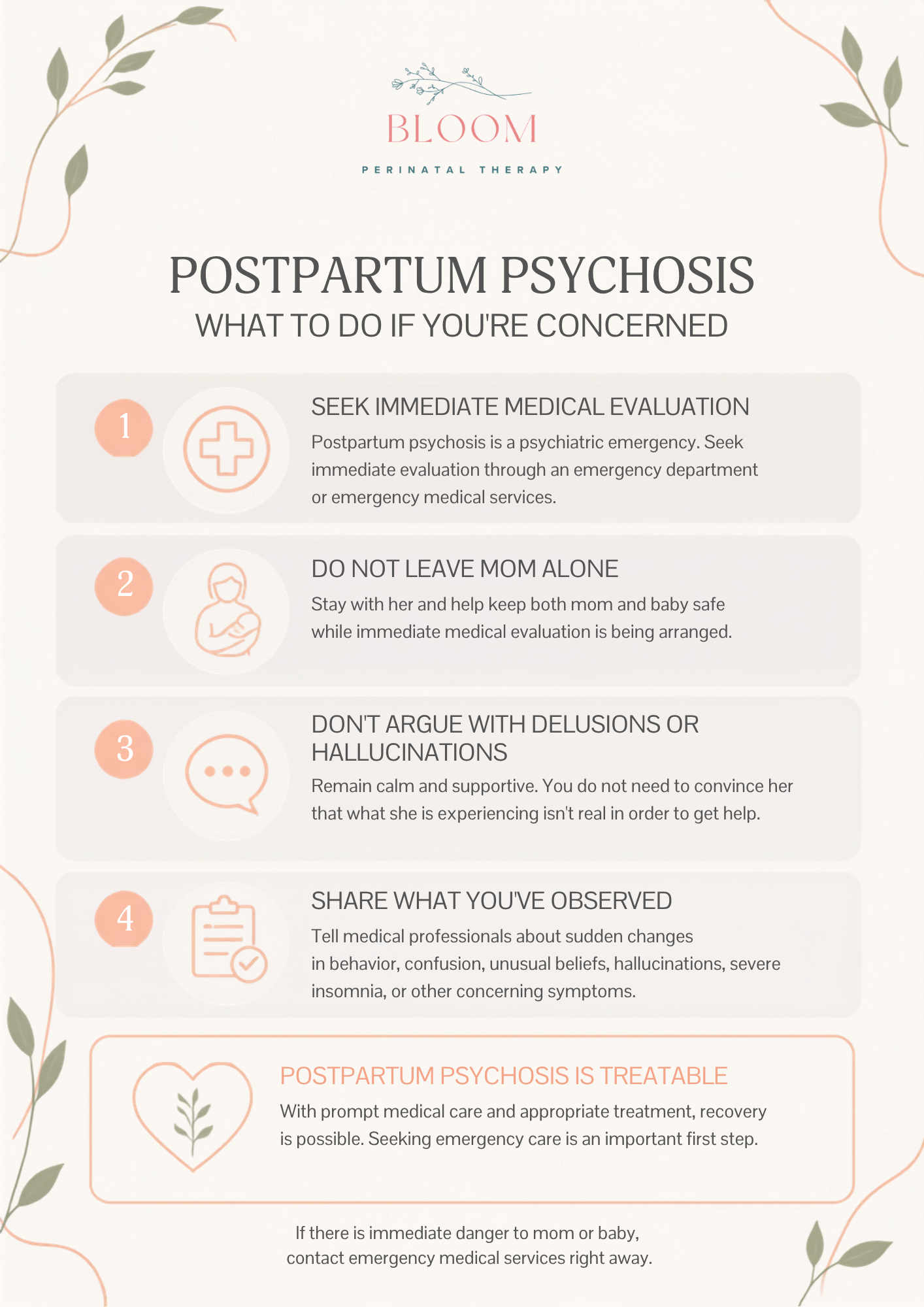
Steps to take if you are concerned about postpartum psychosis. Postpartum psychosis is a psychiatric emergency that requires immediate medical evaluation. Stay with mom, remain calm and supportive, and share concerning symptoms with medical professionals. With prompt medical care and appropriate treatment, recovery is possible.
Getting Help Without Losing Sight of the Mother
Postpartum psychosis is a psychiatric emergency, and getting the mother and baby to safety has to come first. But even in an emergency, I believe we should never lose sight of the person at the center of the experience: the mother.
A mother experiencing postpartum psychosis may not recognize that she is unwell. What she is seeing, hearing, thinking, or believing may feel completely real to her. This is one reason family members and other trusted support people can play such an important role in recognizing changes and helping her receive appropriate medical care.
As a therapist, I believe mothers deserve to be treated with dignity, compassion, and respect—even when their ability to make fully informed decisions may be temporarily affected by their illness. Whenever safely possible, this means explaining what is happening, communicating with her, listening to her fears, and involving her in decisions about her care to the extent that she is able.
Trauma-informed care matters here, too. Emergency treatment can be lifesaving while also being frightening and overwhelming. Hospitalization, separation from a baby, unexpected changes in feeding, loss of independence, or simply not understanding what happened can become significant parts of a mother's postpartum story. These concerns may also contribute to a mother's fear or hesitation about inpatient treatment, particularly when it means being separated from her baby or family.
Keeping a baby safe and caring for the mother are not competing priorities. Supporting the health, dignity, and recovery of the mother is part of caring for the entire family.
Postpartum Psychosis Can Be Treated
Postpartum psychosis is frightening, but it is treatable.
With appropriate medical and psychiatric care, many women recover.
Medical stabilization is an important part of treatment, but for many mothers, there is another layer of recovery that comes afterward.
Recovery After Postpartum Psychosis
Recovery from postpartum psychosis doesn't necessarily end when the immediate symptoms have stabilized.
For some mothers, there may be an emotional recovery that happens afterward as they begin to understand what they experienced. There may be pieces of the experience they remember clearly and others they don't. They may feel confused, embarrassed, frightened, angry, or even grieve parts of the postpartum experience they expected to have.
A mother may also be processing hospitalization, time away from her baby, changes in feeding or bonding, fear about whether psychosis could happen again, or questions about what the experience means for future pregnancies.
This is one place therapy can become an important part of recovery.
Therapy does not replace psychiatric or medical treatment for postpartum psychosis. However, once a mother is medically stable, therapy can provide a space to process what happened, work through trauma or grief connected to the experience, rebuild trust in herself, navigate changes in identity and relationships, and make sense of a postpartum experience that may have looked very different from what she imagined.
In my work with mothers, I believe healing involves more than reducing symptoms. It also means making space for the mother's story—the parts that were frightening, the parts she may be grieving, and the parts she may still be trying to understand.
Recovery can take time, and it doesn't have to follow a perfect or linear path.
Postpartum Psychosis Is Not a Reflection of Who You Are as a Mother.

Mental health symptoms after having a baby can be frightening, especially when they don't look like what you expected motherhood to feel like.
You may worry about being judged, wonder what other people will think, or feel afraid to tell someone what you are experiencing.
But reaching out for help is not a sign that you are a bad mother.
Postpartum mental health conditions are medical conditions, and mothers deserve compassionate, appropriate care.
If you're experiencing symptoms that concern you, talking with a qualified healthcare or mental health professional is an important first step.
Support for Moms in Missouri & Florida
At Bloom Perinatal Therapy, I provide online therapy for women in Missouri and Florida navigating postpartum depression, postpartum anxiety, birth trauma, fertility challenges, pregnancy loss, and other perinatal mental health concerns.
Therapy can provide a safe space to talk about the emotional challenges of pregnancy, birth, and motherhood and to develop tools for navigating this season of life.
However, therapy is not a substitute for emergency psychiatric care. If you or someone you love may be experiencing postpartum psychosis, seek immediate medical evaluation.
Schedule a Free Consultation
During a free 15-minute phone consultation, we'll briefly discuss what you're experiencing, what you're hoping for from therapy, and whether I may be a good fit for you.
Additional Resources for Immediate Support
If you are concerned that you or someone you love may be experiencing postpartum psychosis, do not wait for a routine therapy appointment. Postpartum psychosis requires immediate medical evaluation.
If there is an immediate concern for the safety of the mother or baby, call 911 or go to the nearest emergency department.
Postpartum Support International
Postpartum Support International (PSI) provides information, education, and resources for individuals and families experiencing perinatal mental health concerns, including postpartum psychosis.
PSI can also help families learn more about perinatal mental health conditions and connect with appropriate support and resources. PSI is not an emergency or crisis service. If postpartum psychosis is suspected, seek immediate medical evaluation rather than waiting for a response from a support organization or outpatient provider.
988 Suicide & Crisis Lifeline
If you or someone you love is experiencing suicidal thoughts or emotional distress, you can call or text 988 to reach the 988 Suicide & Crisis Lifeline.
Again, if you believe a mother or baby is in immediate danger or postpartum psychosis may be occurring, call 911 or go to the nearest emergency department for immediate evaluation.
