
Mothering the Mother: Postpartum Support for New Moms

Mother holding her newborn while receiving support during postpartum recovery.
When a baby is born, so much attention naturally shifts to the newest member of the family. Friends and relatives eagerly ask about the baby's weight, which parent the baby looks like, how they're sleeping, and when they can come meet them.
But somewhere in all of the excitement, one important person is often overlooked—the mother.
While mom is learning to feed a newborn, recovering from birth, adjusting to interrupted sleep, navigating changing hormones, and stepping into a completely new identity, she may ask herself, “Who is taking care of me?”
What Does “Mothering the Mother” Mean?
Mothering the mother simply means caring for the woman who has just experienced one of the biggest physical, emotional, and life-changing events of her life.
It doesn't mean assuming she's incapable or needs someone to do everything for her. Instead, it recognizes that healing happens best when mothers feel supported, seen, and cared for.
Many cultures have long recognized this. Around the world, postpartum traditions often include weeks of intentional rest, nourishing meals, help with household responsibilities, and emotional support. These practices acknowledge something our modern culture sometimes forgets: caring for a baby begins with caring for the person who gave birth.
Today, many new mothers are expected to "bounce back quickly.” This often means hosting visitors, keep the house running, return to work, and continue meeting everyone else's needs while quietly putting their own recovery last.
The reality is that postpartum recovery takes time, and mothers deserve support just as much as their babies do.
Mothering the Mother Begins Before Birth

Pregnant woman discussing birth options with her healthcare provider.
Although we often think about postpartum support after the baby arrives, I believe mothering the mother actually begins during pregnancy.
It begins when healthcare providers listen instead of dismissing concerns.
It begins when expecting mothers receive evidence-based information instead of fear-based messaging and threats.
It begins when women are encouraged to ask questions, understand their options, and make informed decisions about their care.
Feeling respected during pregnancy and birth doesn't guarantee everything will go according to plan. Birth is unpredictable, and unexpected situations do happen. But when mothers feel heard, informed, and included in decision-making, they often enter postpartum with a greater sense of trust in themselves and their experiences.
Being cared for before birth lays an important foundation for healing after birth.
Why Mothers Need Support After Birth
As a therapist, I've seen how deeply a mother's emotional well-being is influenced by the support she receives.
When mothers feel cared for, they're often better able to:
Rest and recover physically
Regulate stress during overwhelming moments
Feel more confident in caring for their baby
Reach out when they need help
Process difficult emotions without feeling ashamed
Adjust to the many identity changes that come with transition to motherhood
Are more successful breastfeeding if they choose to
Feel more connected to their baby
Support doesn't eliminate the challenges of postpartum, but it can make those challenges feel far less isolating.
One of the greatest protective factors for postpartum mental health is simply knowing you don't have to do everything alone. When mom feels like she is seen and heard she feels less alone postpartum.
Practical Ways to Support a New Mother

A family friend folding laundry helping mom during postpartum recovery.
Many loved ones genuinely want to help but aren't sure what to do. They often say, "Let me know if you need anything."
While well-intentioned, many new mothers don't know what they need, don't want to inconvenience others, or simply don't have the mental energy to even ask.
Instead of offering open-ended help, consider offering something specific.
You might say:
"I'm bringing dinner over Tuesday evening."
"I'll fold a load of laundry while I visit."
"Can I refill your water bottle or make you a snack?"
"Would you like me to hold the baby while you shower or take a nap?"
"I'm headed to the grocery store. What can I pick up for you?"
"Would it feel better to have company today, or would you rather have some quiet time?"
“Do your sheets need washed?”
Or simply asking….”How are you feeling?”
Sometimes the smallest acts of care communicate the biggest message:
You matter too.
Supporting a new mom doesn't have to be complicated. Small, thoughtful acts of kindness can help her feel seen, cared for, and less alone during postpartum recovery.
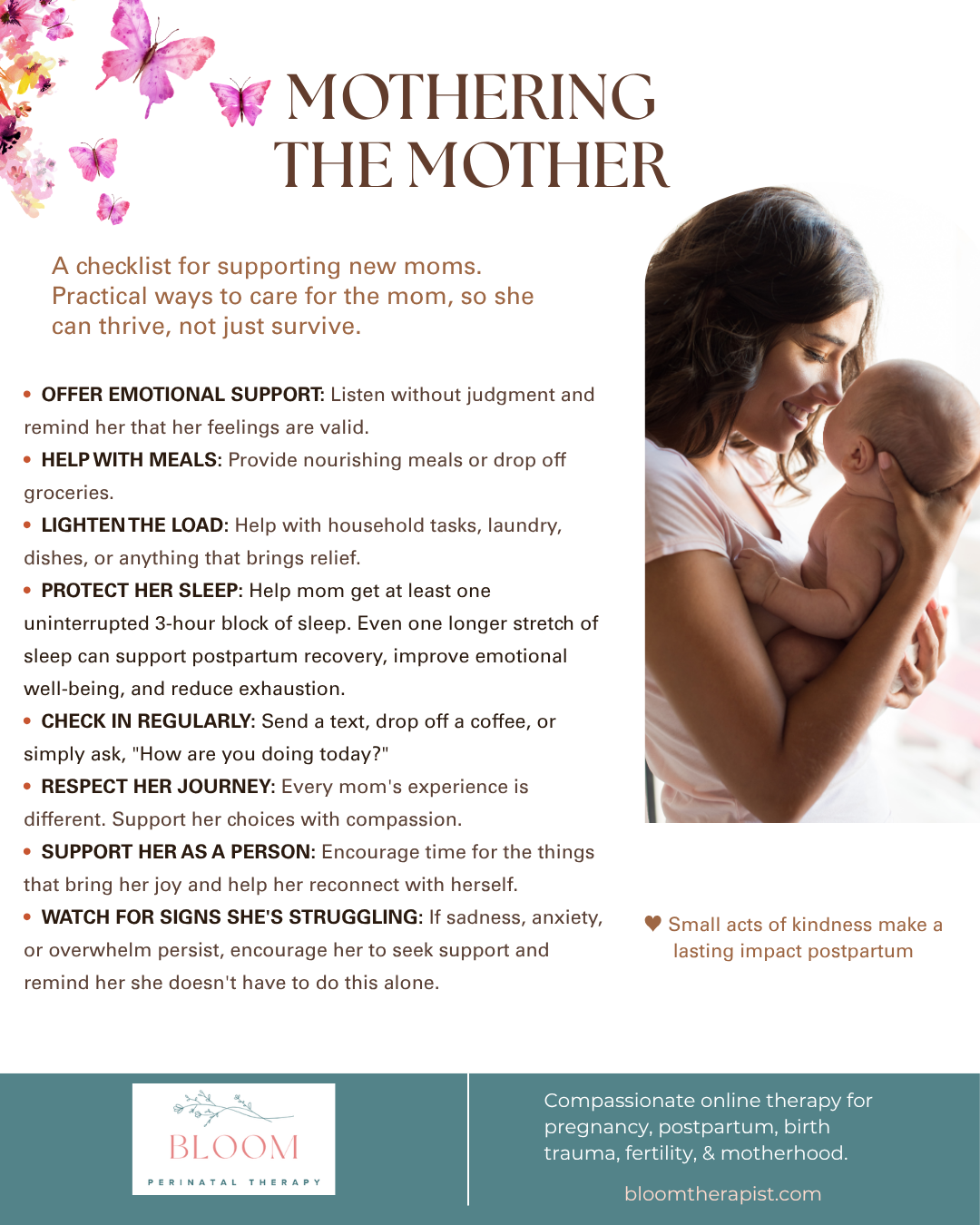
Mothering the Mother Postpartum Support Checklist
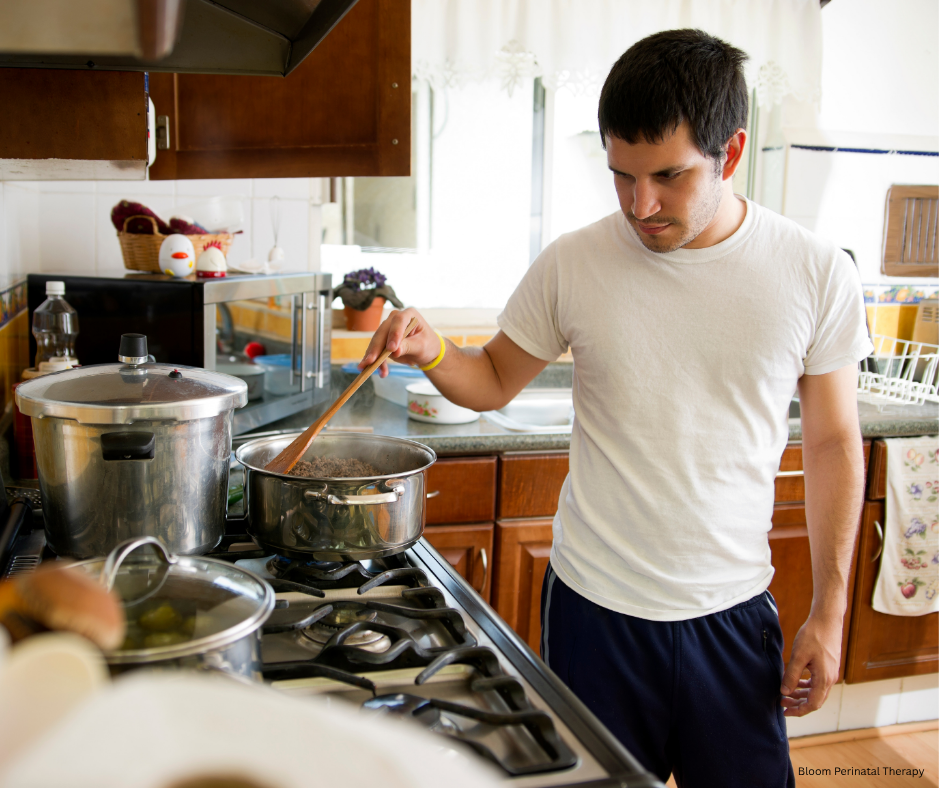
Dad cooks a meal while mom rests after childbirth.
How Can Dads Support a New Mother
Dads play an incredibly important role during the postpartum period.
While it's natural to focus on the baby's needs, don't forget to pay attention to the moms needs as well.
Simple ways to support mom include:
Encouraging uninterrupted rest whenever possible. Postpartum moms benefit from at least 3 hours of uninterrupted sleep to support mental health and recovery.
Taking over household responsibilities without being asked. If you see something that needs to be done, then take charge. This includes cooking, cleaning, laundry, pets, and taking care of older children. Moms wear many hats, and her main focus should be her own healing and bonding with her new baby.
Helping protect her from feeling obligated to entertain visitors. Remember it is okay to put up boundaries and communicate what the mom’s needs are. Saying “no” is okay.
Asking how she's doing emotionally—not just physically. This is especially important if mom had a difficult birth experience.
Listening without trying to immediately fix everything. Being able to actively listen and just being there can be helpful.
Learning about postpartum depression and anxiety so you can recognize when additional support may be needed.
Sometimes the most meaningful thing you can say is, "You're doing an amazing job."
Caring for the Mother Is Good for the Whole Family
Supporting a mother isn't taking attention away from the baby.
It's strengthening the entire family.
When mothers feel emotionally supported, they often have more space to connect with their babies, communicate with their partners, and navigate the ups and downs of early parenthood.
Healthy families aren't created because one person carries every responsibility.
They're built through connection, teamwork, and shared care.
When a Mother Needs More Support
There are times when meals, naps, and extra helping hands aren't enough.
If a mother is experiencing symptoms of postpartum depression, postpartum anxiety, or unresolved birth trauma, working with a postpartum therapist can provide structured support during this transition.
Postpartum depression, postpartum anxiety, birth trauma, and other perinatal mental health concerns are common, and they are treatable.
Seeking therapy isn't a sign that someone has failed at motherhood. It's a sign that they're caring for themselves in the same way they care for everyone else.
Birth Trauma Therapy may also be a source of support and validation for moms postpartum.
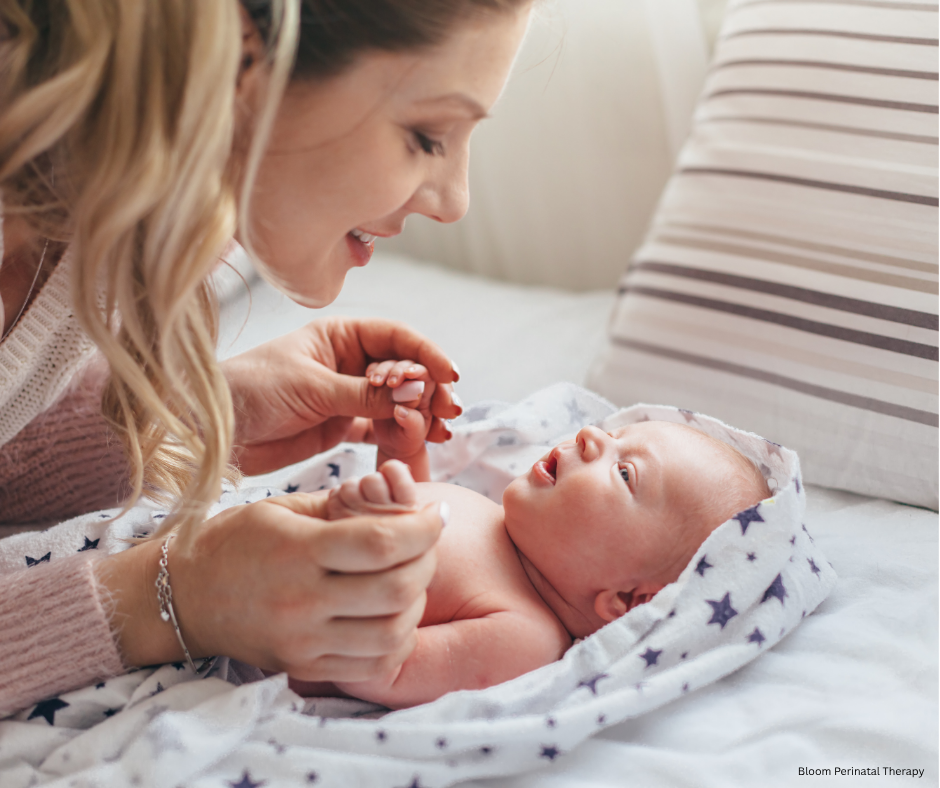
Mother bonding with her baby after receiving support during the postpartum period.
From My Perspective as a Therapist
In my work as a postpartum therapist, I often hear, "It takes a village to raise a child." What happens if mom does not have a “village?” What if mom does have support but she is still having struggles postpartum?

Therapy provides a compassionate, nonjudgmental space where you can process your birth experience, navigate postpartum anxiety or depression, adjust to your identity as a mother, and build coping skills during this transition to motherhood. You don’t have to wait until you’re in crisis to seek support—therapy can be a place to simply be held, heard, and understood.
If you're looking for additional support, I provide Postpartum Therapy in Missouri & Florida.
https://www.bloomtherapist.com/postpartum-depression-anxiety-therapist
Save This Checklist
If you know someone welcoming a new baby, save or share this checklist as a reminder that caring for mom is just as important as caring for baby.
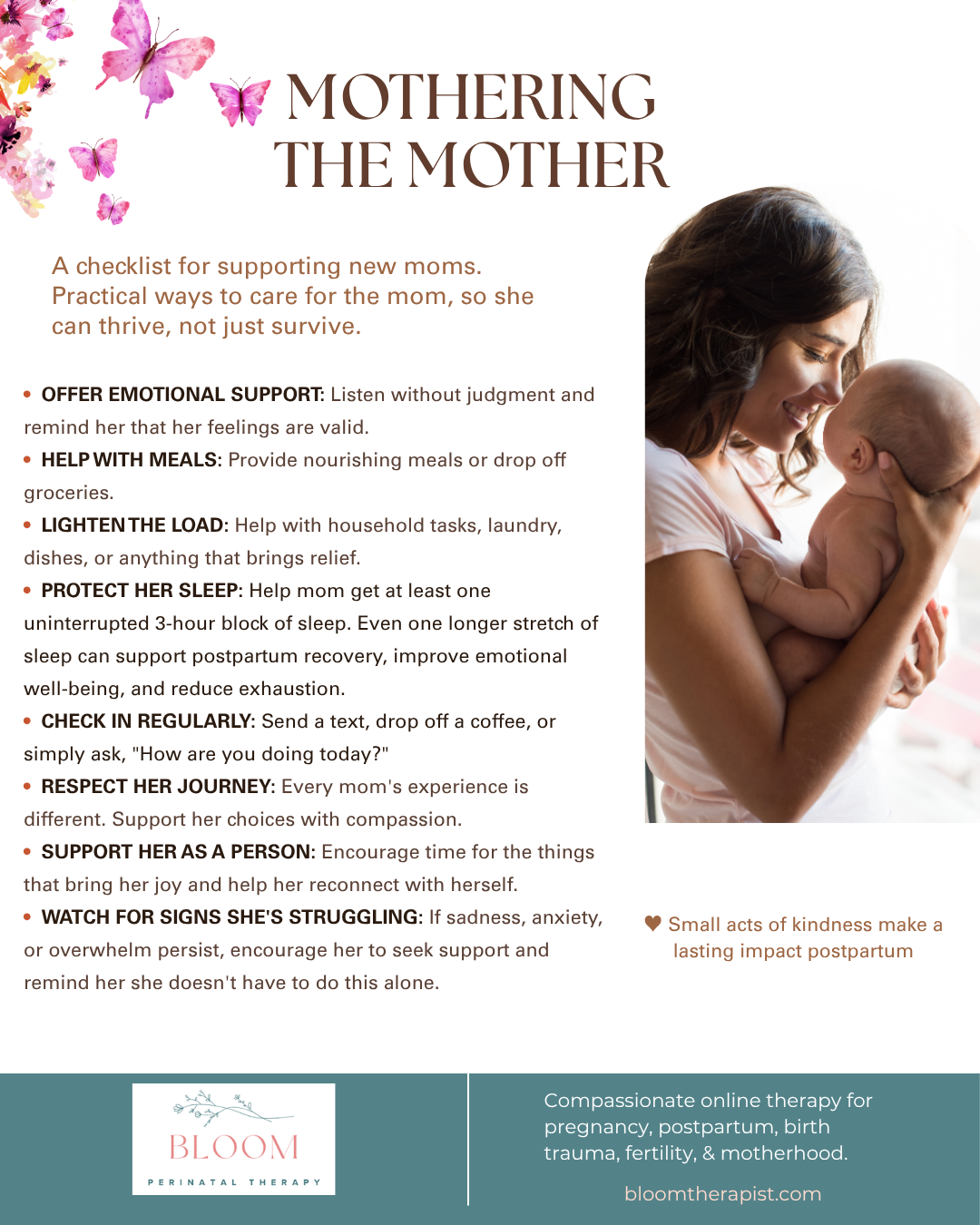
Mothering the Mother checklist with practical ways to support a new mom during postpartum recovery.
